




Nice plant
"Lovely little plant woth new growth showing."


At Plants for all Seasons, we stand behind the quality and vitality of every plant we deliver, which is why we proudly offer a Live Delivery Guarantee. This commitment means that we guarantee your plants will arrive at your doorstep in healthy, thriving condition. We understand the importance of receiving your plants in the best possible state, ready to enhance your space from the moment they arrive. With Plants for all Seasons's Live Delivery Guarantee, you can shop with complete peace of mind, knowing that your green investments are protected from our nursery to your doorstep.

Due to the sensitive and breakable nature of our products, it's understandable that damages may occur despite our meticulous packaging methods. If you find that your plant or pot has arrived in a less than satisfactory condition, please reach out to us at hello@plantsforallseasons.co.uk within a month of your delivery date. When contacting us, please provide your order reference, alongside a photo clearly showing the damaged item and its packaging, including the delivery label. We are committed to resolving such issues by offering a refund or a replacement, depending on the availability of the item in question.
We are unable to accept returns that are not related to damage because plants are inherently perishable and delicate. It's also worth noting that the plant you receive may slightly differ from the images displayed on our website. This variation is natural, given that each plant is unique and subject to seasonal growth changes.

At Plants for all Seasons, we recognise the critical role our courier partners play in ensuring the safe and secure delivery of your plants. We collaborate exclusively with leading courier services, renowned for their reliability and exceptional handling practices, to ensure your plants arrive in perfect condition. Our partners are carefully selected based on their commitment to timely deliveries and their proven track record in transporting delicate items with the utmost care.

At Plants for all Seasons, our commitment to the environment extends to every aspect of our operations, especially in how we deliver your plants. We take pride in our bespoke, eco-friendly packaging, meticulously designed for the safe transport of live plants. Our innovative packaging solutions are crafted from sustainable materials, ensuring that your plants are not only secure but also that their journey from our nursery to your home treads lightly on the earth. This thoughtful approach minimises stress on the plants and reduces waste, aligning with our mission to promote a greener, more sustainable future.
 Ask Leafy.AI
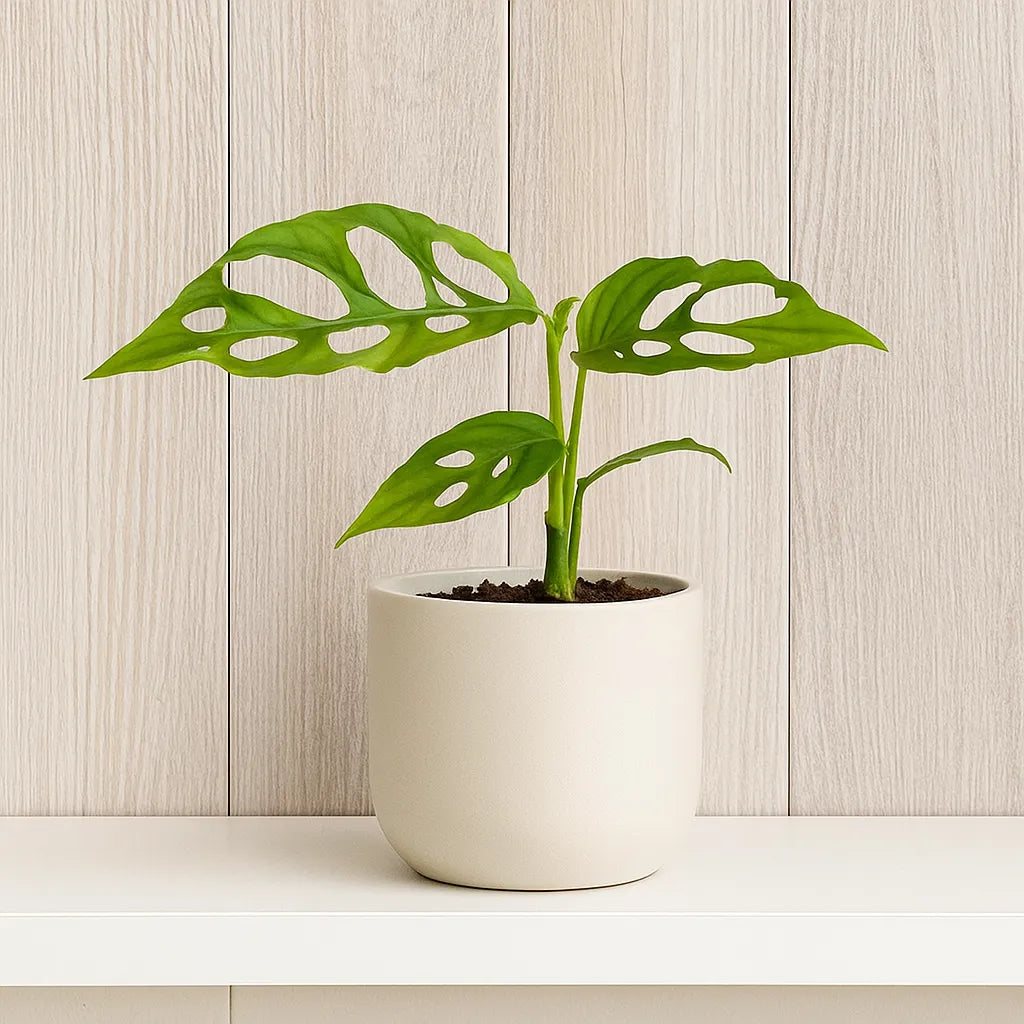
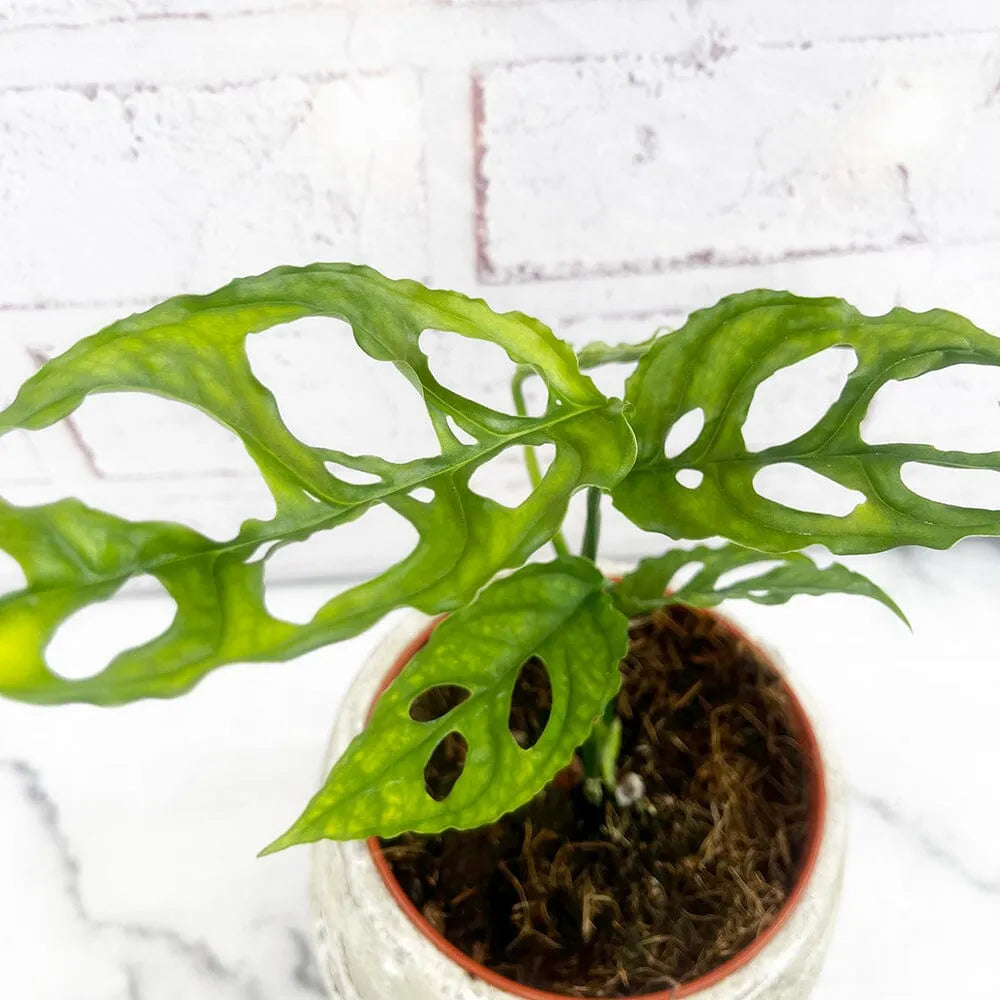
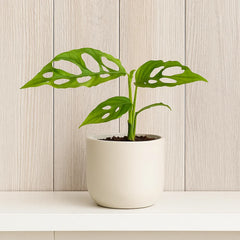
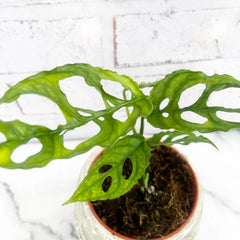
Monstera obliqua (Peru Form) is one of the most elusive and extraordinary species in the Monstera genus, admired for its paper-thin leaves, extreme fenestration, and delicate, lace-like appearance. Native to the humid lowland rainforests of Peru, this ultra-rare plant is a true collector’s gem — often regarded as the pinnacle of aroid refinement.
Unlike more common species such as Monstera adansonii, Monstera obliqua (Peru) has leaves that are so heavily fenestrated that only thin veins of tissue remain between the holes, giving them an ethereal, almost skeletal beauty. The leaves are soft and translucent, held aloft on fine petioles that contribute to the plant’s airy, weightless look. In ideal conditions, it grows as a small climbing or creeping epiphyte, producing a few new leaves each year — each one an exquisite, living sculpture.
Elegant, fragile, and captivating, Monstera obliqua (Peru Form) is the crown jewel of any rare plant collection — a true testament to nature’s artistry and delicacy.
Thrives in bright, indirect light with high humidity. Provide strong but filtered light to encourage healthy growth and preserve the delicate leaf tissue. Avoid direct sunlight, which can burn the thin leaves, and deep shade, which can slow growth dramatically. A position near a north- or east-facing window or under bright grow lights is ideal.
Keep the substrate consistently moist but never waterlogged. Water when the top 1–2 cm of the mix feels slightly dry to the touch. The plant’s fine roots are sensitive to drying out, but they must not sit in standing water. Use distilled or rainwater where possible to prevent mineral buildup on the delicate foliage.
Temperature: Prefers stable warmth between 22–28 °C; avoid temperatures below 18 °C.
Humidity: Requires very high humidity (80–95%). This species thrives best in greenhouse or cabinet conditions. Low humidity will cause the leaves to curl or tear easily. Use a humidifier or enclosed display case for best results.
Use a moisture-retentive yet well-draining aroid mix with excellent aeration. A blend of sphagnum moss, fine orchid bark, perlite, and coco coir works well. The roots prefer constant moisture and air circulation. Mounting on a moss pole, slab, or fine-grain sphagnum substrate closely replicates its natural epiphytic habit. Repot only when necessary, as the roots are fragile.
Feed very lightly — once every 6–8 weeks during active growth — using a diluted, balanced liquid fertiliser. Avoid over-fertilising, as the delicate roots can be easily damaged. Suspend feeding during dormancy or cooler months.
Minimal pruning is needed. Remove any yellowed or damaged leaves carefully with sterile scissors. Avoid touching or bending the delicate leaf tissue unnecessarily, as it can tear easily. Wipe leaves gently with distilled water to remove dust if required.
A slow grower, Monstera obliqua (Peru) typically produces only a few new leaves per year under cultivation. Mature specimens can reach 30–60 cm in height when climbing, with leaves up to 20 cm long and 15 cm wide, though most of that surface is open fenestration. Each mature leaf is an extraordinary example of precision and fragility, making every new growth a true event for collectors.
Brown leaf edges: Low humidity or inconsistent watering.
Yellowing leaves: Overwatering or compact substrate.
Slow growth: Insufficient light or inadequate warmth.
Pests: Occasionally spider mites or thrips; maintain high humidity and use gentle neem oil treatments if needed.
Monstera obliqua is native to tropical Central and South America, though the Peruvian form is the most famous and highly sought after due to its extreme fenestration. In the wild, it grows as an epiphytic climber, attaching itself to trees in the humid forest canopy, where it absorbs moisture and nutrients from the air and rain.
Due to its delicate structure and slow growth, Monstera obliqua (Peru) has achieved near-mythical status among rare plant collectors. It is often confused with Monstera adansonii, but true obliqua specimens are far rarer and notably more fragile, with leaves that feel like thin paper. When cultivated successfully, it rewards growers with an unparalleled display of botanical intricacy and elegance.
Light: Bright, indirect light; no direct sun
Water: Keep soil lightly moist; never allow to dry completely
Temperature: 22–28 °C; avoid below 18 °C
Humidity: Very high (80–95%)
Soil: Moist, airy mix – sphagnum, fine bark, perlite, coco coir
Feed: Every 6–8 weeks in spring/summer, very lightly
Growth: Small, slow-growing climber, 30–60 cm; delicate, paper-thin leaves with extreme fenestration
⚠️ Toxicity note: Contains calcium oxalate crystals and is toxic if ingested. Keep away from pets and children.
Display Monstera obliqua (Peru Form) in a glass terrarium, greenhouse cabinet, or high-humidity enclosure where its rare beauty can be admired up close. Pair it with equally delicate species such as Anthurium crystallinum or Philodendron micans for a soft, refined tropical aesthetic. The ethereal lacework of its foliage makes it a natural conversation piece — a living embodiment of rarity, patience, and tropical sophistication.
Overall rating: 4.5 / 5 from 2 reviews.
Review topics: [].
"Lovely little plant woth new growth showing."
"It’s a lovely plant and it came undamaged and even has a new leaf unfurling so happy with it !!!!"
By Plants for all Seasons
A plant care expert that gives clear, friendly advice for all your houseplants and garden plants – tailored to UK conditions. Perfect for beginners and seasoned growers alike.
Terms of Use